Expert articles, patient care guides, and technical innovations in artificial limbs and orthotics.
Explore ArticlesUnderstanding gait correction, foot-drop rehabilitation, and custom AFO orthoses technology.
Read ArticleErgonomic designs and powered mobility solutions empowering patient independence worldwide.
Read ArticleComprehensive guides on amputation level solutions, socket fitting, and bio-mechanical alignment.
Read ArticleClinical approaches to post-operative recovery, diabetic foot care, and orthopaedic footwear.
Read ArticleAdvanced structural stabilization and full-body postural rehabilitation methods.
Read ArticleChoosing among China’s top 10 Above Knee Prosthesis manufacturers requires more than comparing product photos or factory claims. A dependable review should examine clinical experience, engineering capability, production consistency, and after-sales support. The best supplier may not be the largest one. It may be the company that listens carefully to a prosthetist’s fitting concerns.
This guide evaluates manufacturers through practical evidence. Key factors include material quality, socket design, knee-joint compatibility, alignment support, customization options, and documented quality systems. ISO 13485 certification can indicate structured medical-device processes, but certification alone does not prove excellent patient outcomes. Buyers should also check regulatory documentation, sample inspection procedures, warranty terms, and communication during a trial order. Small details matter. A poorly explained adjustment can delay rehabilitation.
Clinical cooperation is another important signal. Manufacturers that understand residual-limb changes, gait training, weight distribution, and user comfort may provide more useful solutions. Export experience can help, especially when replacement parts and technical instructions must cross borders. Still, online information is often incomplete. No ranking is perfect.
Some companies may have strong manufacturing capacity but limited rehabilitation support. Others may offer thoughtful customization but slower delivery. This article therefore presents a practical comparison, not an absolute verdict. Readers should verify current certifications, product specifications, and service conditions directly with each manufacturer. A suitable Above Knee Prosthesis must match the user’s anatomy, mobility goals, clinical plan, and local professional support. That final decision deserves careful review.
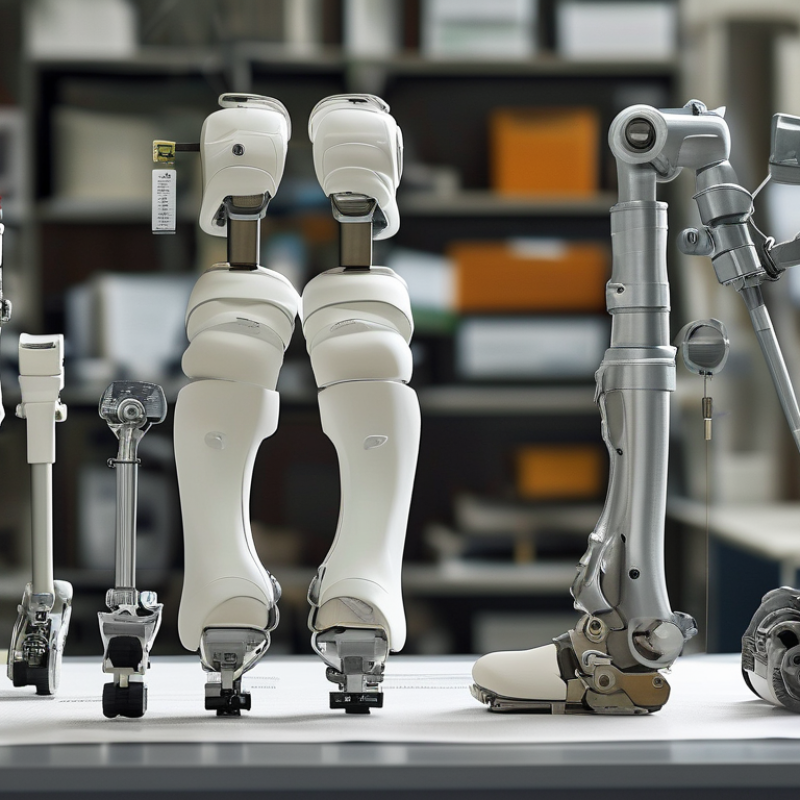
An above-knee prosthesis, also called a transfemoral prosthesis, replaces a missing leg above the natural knee. Its scope includes the socket, artificial knee, connecting pylon, foot, and suspension system. Each part affects comfort, balance, walking speed, and daily safety. A suitable design depends on residual-limb length, muscle strength, skin condition, activity level, and personal goals.
In practice, fitting requires more than selecting a product from a manufacturer list. A certified prosthetist measures the residual limb, studies walking patterns, and adjusts alignment during movement. Rehabilitation specialists may train users to manage stairs, uneven ground, and prolonged standing. Experience matters because small pressure points can become painful after several hours. A perfect fit is not guaranteed at the first visit. Reassessment is often necessary as the limb changes.
Tips: Ask how the socket is adjusted, cleaned, and maintained. Check whether replacement parts and clinical support are available. Keep a simple record of pain, skin redness, and walking difficulty. Persistent redness needs professional attention. Also, do not judge a prosthesis by appearance alone; real comfort appears during ordinary tasks, not only in a showroom.
Chinese above-knee prosthesis manufacturers increasingly combine digital design with practical workshop expertise. Many use 3D scanning to capture residual-limb shapes, then modify socket models through CAD software. CNC machining improves repeatability for adapters and structural components. Yet digital files cannot replace clinical judgment. A small pressure point may still appear after several hours of walking.
Material selection is another key technology. Carbon-fiber laminates can reduce weight while maintaining stiffness, especially in active users. Titanium and aluminum components support strength, corrosion resistance, and controlled adjustment. Some knee systems use hydraulic resistance, pneumatic control, or microprocessor sensors. These technologies help manage swing speed, stance stability, and uneven ground. However, advanced control does not guarantee comfort. Poor alignment can make an expensive knee feel surprisingly unstable.
Reliable manufacturers usually combine mechanical testing with fitting feedback. Tests may examine repeated loading, joint motion, connection strength, and environmental exposure. Quality teams also check dimensional tolerances at different production stages. In practice, technicians often adjust socket trim lines, knee height, and foot position after real walking trials. That detail matters. A factory may produce accurate components, but user outcomes depend on assessment, alignment, training, and follow-up service. Chinese suppliers with mature engineering teams increasingly document these steps, although consistency between factories still deserves careful review. Procurement teams should examine test records, material traceability, fitting support, and long-term replacement access before making comparisons.
China’s top 10 above-knee prosthesis manufacturers should be assessed through evidence, not advertising claims. The WHO and UNICEF Global Report on Assistive Technology estimates that 2.5 billion people need assistive products worldwide. This figure may exceed 3.5 billion by 2050. China’s aging population and expanding rehabilitation services are increasing demand for reliable lower-limb solutions.
A serious manufacturer should provide documented testing, fitting guidance, and traceable component information. ISO 10328 testing evaluates prosthetic structural strength under repeated loading. That matters when a user walks across uneven pavement, climbs stairs, or carries groceries. Practical experience also shows that socket comfort can matter more than appearance. Small pressure points become painful after several hours. Manufacturing quality must remain stable across repeated orders.
Public procurement records, clinical feedback, export experience, and after-sales response can help identify leading Chinese manufacturers. However, rankings are not always transparent, and some market reports combine finished prostheses with separate components. That weakens direct comparisons. Buyers should check weight limits, knee-joint control, alignment options, warranty terms, and replacement access. A low quotation may hide fitting costs or limited technical support. Better evidence comes from test reports, clinician interviews, user trials, and factory audits. Not every highly visible supplier deserves a top-ten position.
China Top 10 Above Knee Prosthesis Manufacturers?
Comparing leading above-knee prosthesis manufacturers requires more than reviewing product photos. Quality begins with material consistency, joint durability, and accurate manufacturing records. Ask whether components undergo documented mechanical testing and batch traceability. A socket may look smooth, yet poor edge shaping can create pressure during a ten-minute walk. Check weight, noise, corrosion resistance, and alignment options. These details affect daily confidence.
Design should match the user, not only the catalogue. A microprocessor knee may support varied walking speeds, while a mechanical knee can offer simpler maintenance. Clinicians should examine stance control, swing response, and adjustment range during gait training. Observe how quickly the prosthesis adapts to ramps, stairs, and uneven pavement. Small fitting changes matter.
Clinical support often separates a reliable supplier from an attractive seller. Look for trained prosthetists, fitting protocols, remote troubleshooting, spare-part availability, and clear warranty terms. Request anonymized clinical feedback when possible. Response time matters after delivery. Very much.
Do not rely on one impressive demonstration. A polished presentation can hide limited follow-up service. My own comparison checklist would include user comfort after several weeks, not just the first fitting. No scorecard is perfect. Still, documented evidence, practical testing, and honest communication provide a safer basis for evaluation.
International buyers should assess more than a supplier’s ranking or factory photos. Request an ISO 13485 certificate, product test reports, and clear technical specifications. Confirm whether the device is registered for your target market. Requirements may differ across Europe, North America, and other regions. Ask about knee-joint materials, weight limits, alignment options, socket compatibility, and adjustment procedures. These details affect comfort, safety, and clinical usability.
Request samples before placing a large order. Examine surface finishing, connectors, packaging, and instruction quality. A reliable manufacturer should provide traceability records and stable batch control. Discuss minimum order quantities, production capacity, lead time, payment terms, and Incoterms in writing. Also verify export documents, labeling, spare parts, and after-sales training. Remote support helps, but it cannot replace skilled local fitting.
Price deserves careful attention. A cheaper component may create higher costs through returns, repairs, or delayed customs clearance. During factory evaluation, ask to review quality checkpoints and corrective-action records. Suppliers may welcome audits, though not every audit reveals daily production problems. That limitation matters. Build a small pilot order with defined acceptance standards. Measure delivery accuracy, communication speed, and complaint handling before expanding cooperation. A practical contract should identify warranty coverage, replacement timelines, and responsibility for transport damage.
It replaces a leg missing above the natural knee. It usually includes a socket, artificial knee, pylon, foot, and suspension system. Each part affects comfort, balance, walking speed, and safety.
Selection depends on residual-limb length, muscle strength, skin condition, activity level, and personal goals. A certified prosthetist should measure the limb and observe walking patterns. Personal fitting matters more than appearance.
Not always. The residual limb can change over time. Pressure points may appear after several hours of walking. Regular reassessment and small adjustments are often necessary.
Check for pain, skin redness, slipping, and difficulty during ordinary tasks. Walk on different surfaces, not only inside a clinic. Persistent redness needs professional attention.
Three-dimensional scanning captures the residual-limb shape. Computer-aided design helps modify socket models. Computer-controlled machining improves repeatability for structural parts. Digital accuracy still cannot replace clinical judgment.
Carbon-fiber laminates can reduce weight while maintaining stiffness. Titanium and aluminum support strength, corrosion resistance, and adjustment. Material choice should match the user’s activity and body requirements.
Hydraulic, pneumatic, or sensor-based systems can manage swing speed and stance stability. They may also help on uneven ground. Advanced control does not guarantee comfort. Poor alignment can still create instability.
Review structural testing, material traceability, fitting support, warranty terms, and replacement access. ISO 10328 testing can indicate repeated-load strength. Factory audits and user trials provide useful evidence. Rankings may be incomplete, so do not trust visibility alone.
This article provides a practical overview of the Above Knee Prosthesis market in China, beginning with the definition, structure, and functional scope of prosthetic solutions designed for users with above-knee limb loss. It explains key technologies used by Chinese manufacturers, including lightweight materials, modular components, hydraulic and microprocessor-controlled knee systems, socket customization, and gait-support features. The discussion then introduces the top 10 manufacturers based on factors such as product development, manufacturing capability, reliability, and service coverage, without focusing on brand promotion.
Readers will also learn how to compare prosthetic quality, design, user comfort, durability, clinical support, and after-sales service. For international buyers, the article highlights important purchasing considerations, including certification, customization, documentation, production capacity, communication, shipping, warranty terms, and long-term maintenance. This overview is intended to support informed evaluation and responsible procurement decisions.